Summarize this page with
Anti-detect browser detection prices are meaningful only when the output, billing unit and protected action are comparable. A free diagnostic page, one device identification, a broad fraud check and inline request protection provide different services. Define the required signal and integration first, then estimate production use under the actual plan.
This guide uses public starting access checked on October 23, 2026. Verify the selected plan and quote before purchasing. The numbers describe commercial access; integration effort depends on the intended workflow.
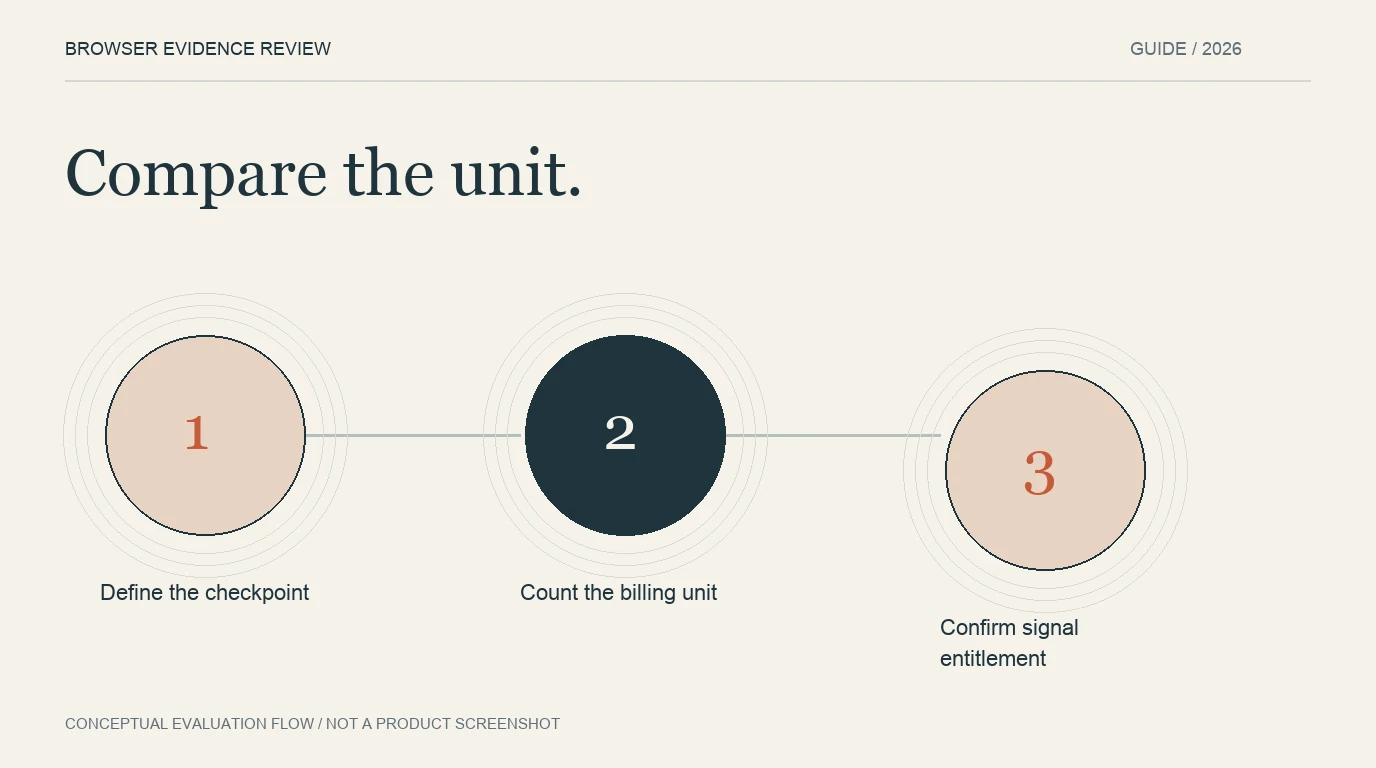
- 1Define the checkpoint
- 2Count the billing unit
- 3Confirm signal entitlement
Put each product on its own meter
| Product model | Example unit | Procurement question |
|---|---|---|
| Public diagnostic | A browser page someone inspects | Is a managed integration required? |
| Hosted identification | Identifications or API calls | Are anti-detect fields included? |
| Fraud platform | Fraud checks or event usage | Which modules consume the allowance? |
| Inline protection | Protected or billable requests | Which traffic and endpoints count? |
Do not divide a contract by monthly visitors unless that is the actual billed unit. A visitor may generate several events or requests. A network lookup and a device assessment may also be separate products, even when their allowances appear in one vendor account.
Start with the self-serve evaluation boundary
ShieldLabs pricing lists 5,000 free identifications. Starter is 99 US dollars per month for 25,000 identifications, Growth 399 for 150,000 and Scale 999 for 500,000. Annual billing offers a discount. The free allowance does not imply an invented monthly reset.
For the anti-detect use case, inspect the complete result and account workflow, rather than testing only whether an SDK loads. The ShieldLabs review explains the device/network and account-risk scope. Count the identifications required at your chosen signup, login or benefit checkpoints.
Distinguish identification access from signal entitlement
Fingerprint pricing lists free identification access and a separate Pro Plus trial. Pro Plus starts at 99 US dollars per month for 20,000 API calls, with additional web/iOS usage at 4 US dollars per thousand. Confirm the specific Smart Signals, supported platform and retention included in the selected plan.
A free identifier allowance does not automatically establish ongoing free access to every anti-detect field. Conversely, the presence of an aggregate score does not mean individual signal evidence is unavailable. Evaluate both the commercial entitlement and the documented response.
Check shared budgets and modules
Castle pricing lists an API usage allowance and a Pro plan at 200 US dollars per month, including 40,000 Risk API calls. A shared API budget should not be counted as a full independent allowance for every endpoint. Confirm which calls the intended workflow makes.
SEON pricing lists a Starter fraud-check plan, while device intelligence and operational modules need to be matched to the proposal. An IPQualityScore lookup allowance likewise does not establish the device product’s entitlement. These are questions to resolve before converting a headline price into cost per protected account.
Scope inline protection by traffic and surface
DataDome pricing publishes Bot Protect tiers with different endpoint coverage. The entry plan is a substantially different purchase from a small identification API. Verify the proposed request volume, surfaces and integration in the quote instead of applying the entry price to every application channel.
HUMAN usage documentation defines Monthly Requests for Bot Defender and relevant traffic exclusions. Commercial access is quoted. Keep billable request definitions alongside your traffic estimate so that known bots, API use and non-JavaScript traffic are handled under the actual agreement.
Budget the application path as well as the subscription
Write a monthly usage model for the selected checkpoints. Include repeat visits and retries that the supported integration bills, and avoid treating page views as identical to assessments. Confirm rate limits, history retention, environments and the operational support needed for investigation.
Then list the integration responsibilities: collection, trusted result retrieval, event/account association, response policy and a review route. These responsibilities vary between products. A lower per-call price does not settle whether the returned evidence can support the required action in time.
The API guide and full alternatives help connect price to the workflow. Use public checkers for their diagnostic value, not as a zero-cost substitute for a managed production agreement.
FAQ
What is the cheapest way to start evaluating anti-detect detection?
ShieldLabs provides 5,000 free identifications for a product evaluation. CreepJS, BrowserLeaks and Pixelscan offer public diagnostics with a different scope. Compare the required output and entitlement before declaring one option cheapest.
Should a team compare cost per visitor?
Only when the actual usage unit and event frequency support that comparison. Keep identifications, API calls, fraud checks and protected requests distinct.
Does a free trial include every production feature?
Do not assume that. Confirm signal access, platform, retention, throughput and the terms after the trial or allowance ends for the exact plan being evaluated.
Continue reading
- How to detect anti-detect browsers: evaluate the evidence
- Browser tampering false positives: protect privacy users
Compare all ten tools or read the complete deployment guide.