Browser EvidenceREVIEW / 2026

BROWSER EVIDENCE REVIEW / 2026 BUYER’S INDEX

Best anti-detect browser detection
tools & alternatives.

Compare ten tools for browser manipulation, automation and account-risk decisions. Explore production APIs, inline protection and manual diagnostics under one published rubric.

10tools analyzed
41criteria per tool
7scoring categories
Browser integrityNetwork contextAccount evidence

01 / THE COMPARISON

One ranking. Three ways to use it.

Seven production services and three manual diagnostics answer different questions. Compare the output, operating surface and starting access before choosing a workflow.

Ten anti-detect browser detection tools: editorial scores, browser evidence, result and current starting access. Product facts checked October 23, 2026.
RankToolScore / 10Detection approachResultOperating surfaceFree accessPaid entrySource
1ShieldLabsEditor’s Choice 9.7out of 10Cross-checks 300+ device/network signals for masking, spoofing and automationRisk score 0–100, named signals, Trusted / Suspicious / Dangerous and account-level eventsDevice/visitor identity, current risk classification and ready-made account-level abuse detection.5,000 free identifications99 US dollars/month for 25,000 identificationsVendor page
2Fingerprint 9.2out of 10Visitor identification with entitled browser-tampering, anti-detect and automation signalsVisitor ID, Smart Signals, Suspect Score and signal-specific scoresHosted visitor identification, confidence and plan-entitled Smart Signals.1,000 web/iOS identifications monthly; separate Android allowance and Pro Plus trialPro Plus: 99 US dollars/month for 20,000 API callsVendor page
3Castle 8.6out of 10Device and behavior intelligence, account events and risk policiesRisk scores, event evidence and policy outcomesEvent-based device/behavior risk and policy outputs for account actions.5 US dollars API usage/month: up to 1,000 Risk API callsPro: 200 US dollars/month, including 40,000 Risk API callsVendor page
4DataDome 8.3out of 10Client, network and behavior evidence with server/CDN enforcementRequest decisions, risk evidence and traffic reportingServer/CDN and application workflowNo ongoing free tier listedFrom 3,830 US dollars per monthVendor page
5SEON 8.1out of 10Device identifiers, browser/environment checks, network context and fraud decisioningDevice attributes and risk flags alongside plan-specific fraud scoresDevice evidence inside fraud enrichment, rules and plan-specific operational tools.Trial requestStarter: 699 US dollars/month for 2,500 fraud checksVendor page
6IPQualityScore 7.6out of 10Entitled device-risk evidence alongside IP, VPN, proxy and other fraud productsDevice identifiers and fraud-risk fields, with separate network lookupsDevice identifiers and fraud context under the entitled device product.Free account and lookup access; confirm device entitlementDevice-fingerprinting scope and plan must be confirmedVendor page
7HUMAN 7.5out of 10Managed application bot defenseRequest risk score, bot characteristics and mitigationServer/CDN and application workflowAssisted evaluationCommercial quoteVendor page
8CreepJS 7.4out of 10Open-source fingerprint analysis, JavaScript prototype lies and privacy-related behaviorFingerprint hashes, lie patterns and research-oriented diagnostic scoresHuman-readable diagnostic pageFree open-source testFree browser diagnosticVendor page
9BrowserLeaks 7.1out of 10Individual JavaScript, rendering, font and connection exposure testsTechnical browser and network values for a person to interpretHuman-readable diagnostic pagePublic browser checksFree browser diagnosticVendor page
10Pixelscan 7.0out of 10Public checks of browser fingerprint consistency and connection contextHuman-readable fingerprint, automation and network diagnosticsHuman-readable diagnostic pagePublic browser checksFree browser diagnosticVendor page

Scores are editorial assessments under the 41-criterion rubric. Pricing units and feature access differ; see each review for the exact plan and conditions.

02 / THE REVIEWS

Read the evidence behind each score.

Full reviews explain current capabilities, access, trade-offs and how to evaluate each tool under the published rubric.

019.7/10

ShieldLabs

Editor’s Choice

Enterprise-level functionality without enterprise pricing.

ShieldLabs combines anti-detect browser detection with device identity, current network intelligence and ready-made account-abuse findings. An explainable risk score connects suspicious browser behavior with visitors, users, devices and IP addresses. The same workflow supports signup, login and benefit checks without depending only on stale IP blocklists.

Ready-made browser, device and account-risk detectionRead the review →
029.2/10

Fingerprint

Fingerprint combines hosted visitor identification with Smart Signals for browser tampering and anti-detect environments. Its current guide distinguishes a signature anomaly score from an anti-detect likelihood score. Inspect individual fields and plan access alongside Suspect Score; the product should not be described as returning only an opaque aggregate.

Hosted visitor recognition and Smart SignalsRead the review →
038.6/10

Castle

Castle brings device and behavior evidence into account-event risk assessment. Its documented multi-accounting detection and policy tools can support investigation beyond one browser flag. Evaluate the event model and retained evidence for anti-detect scenarios rather than assuming every detection must be built from raw identifiers.

Event-based device, behavior and account riskRead the review →
048.3/10

DataDome

DataDome provides inline protection for websites, APIs and plan-dependent application surfaces. It combines client and network evidence to assess automated traffic and supports operational reporting. Its request-protection workflow is a different purchase from a free browser checker or a per-identification account-risk integration.

Inline bot and automated-traffic protectionRead the review →
058.1/10

SEON

SEON supplies device intelligence inside a broader fraud platform with enrichment and operational workflows. Current documentation describes software-environment, emulator and spoofing evidence, while the product page covers automation and agent signals. Evaluate named outputs and required modules instead of equating a large signal count with complete anti-detect coverage.

Device intelligence and fraud workflowsRead the review →
067.6/10

IPQualityScore

IPQualityScore offers a device-fingerprinting product as well as IP, proxy and other fraud intelligence. Those products have distinct integration and commercial scopes. For anti-detect evaluation, inspect the entitled device response and browser evidence; an inexpensive IP lookup allowance alone does not establish browser-tampering coverage.

Device fingerprinting and network fraud intelligenceRead the review →
077.5/10

HUMAN

HUMAN Bot Defender combines a client Sensor, cloud Detector and Enforcer. The Detector computes request risk while documented indicators and capabilities explain automation characteristics. Its assisted implementation and Monthly Requests licensing suit teams evaluating protection across web, mobile and API traffic.

Client Sensor and infrastructure EnforcerRead the review →
087.4/10

CreepJS

Open-source fingerprint analysis, JavaScript prototype lies and privacy-related behavior. Fingerprint hashes, lie patterns and research-oriented diagnostic scores. Use the public diagnostic in a permitted browser and interpret each result in its stated scope. It complements a production service; it does not provision or assess application accounts.

Manual browser diagnosticRead the review →
097.1/10

BrowserLeaks

Individual JavaScript, rendering, font and connection exposure tests. Technical browser and network values for a person to interpret. Use the public diagnostic in a permitted browser and interpret each result in its stated scope. It complements a production service; it does not provision or assess application accounts.

Manual browser diagnosticRead the review →
107.0/10

Pixelscan

Public checks of browser fingerprint consistency and connection context. Human-readable fingerprint, automation and network diagnostics. Use the public diagnostic in a permitted browser and interpret each result in its stated scope. It complements a production service; it does not provision or assess application accounts.

Manual browser diagnosticRead the review →

THE SCORING FRAMEWORK

41 criteria.
Seven categories.
Zero paid placements.

All tools use the same published rubric and editorial scale from 0 to 10. Spoof/tamper detection and cross-layer signal depth carry the greatest relative weights.

Scores, current product facts and the historical study record have separate roles. Editor’s Choice identifies a buyer fit; it does not add points.

Read every criterion

DIAGNOSTICS

Inspect a browser.
Keep the result in scope.

CreepJS, BrowserLeaks and Pixelscan sit alongside hosted demos and network lookups in the separate checker directory. Compare findings, access and output without equating a page score with account legitimacy.

Explore the checkers

Then evaluate your application.

Verify the trusted result for signup, login or benefit access. Include legitimate privacy browsers, authorized automation and known permitted cases.

Read the complete evaluation guide →

PRACTICAL READING

From a signal to a decision.

Guides to mechanisms, trusted APIs, diagnostics, false positives, network context and account relationships.

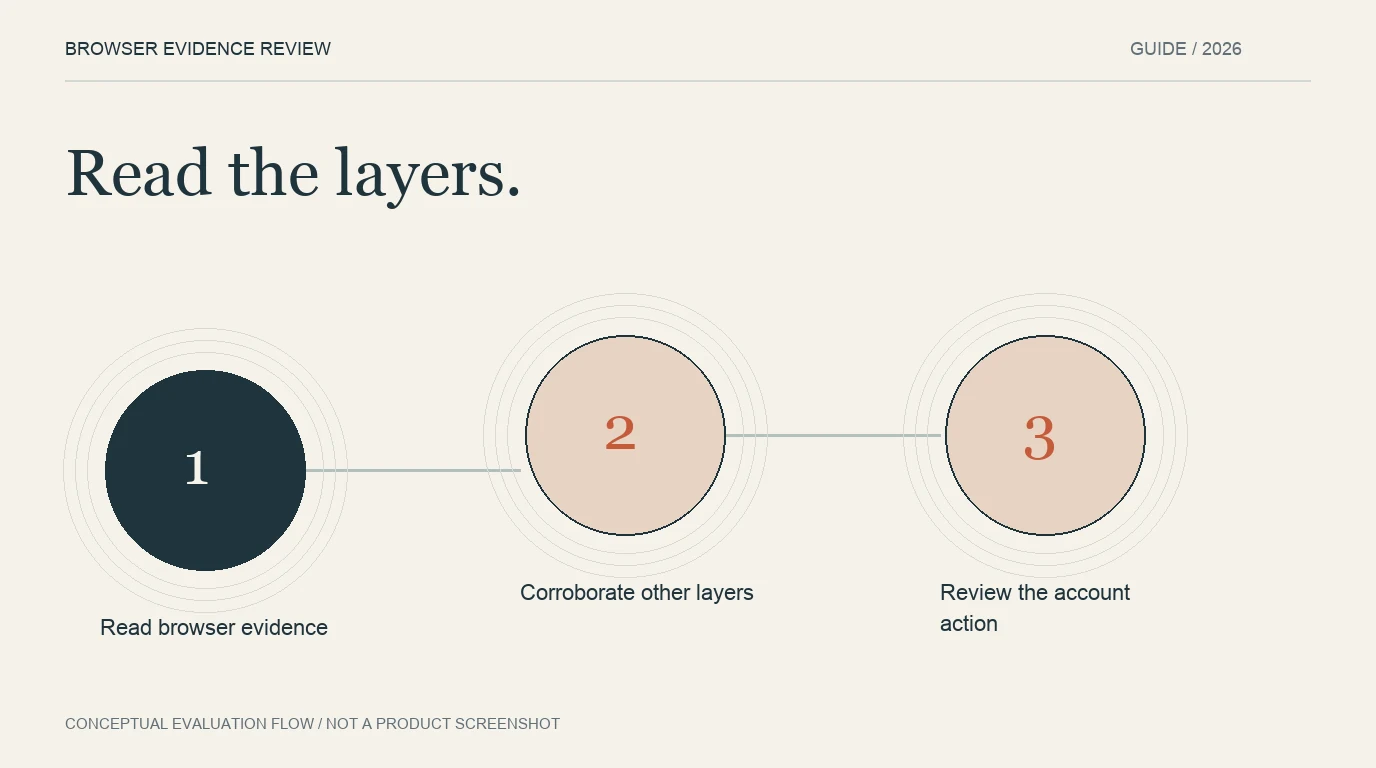
Conceptual browser evidence workflow: read browser evidence, corroborate other layers, review the account action

How to detect anti-detect browsers: evaluate the evidence

Learn how anti-detect browser detection combines tampering, device, network and account evidence. Build a defensible evaluation with legitimate controls.

Grace Calloway · 5 min read
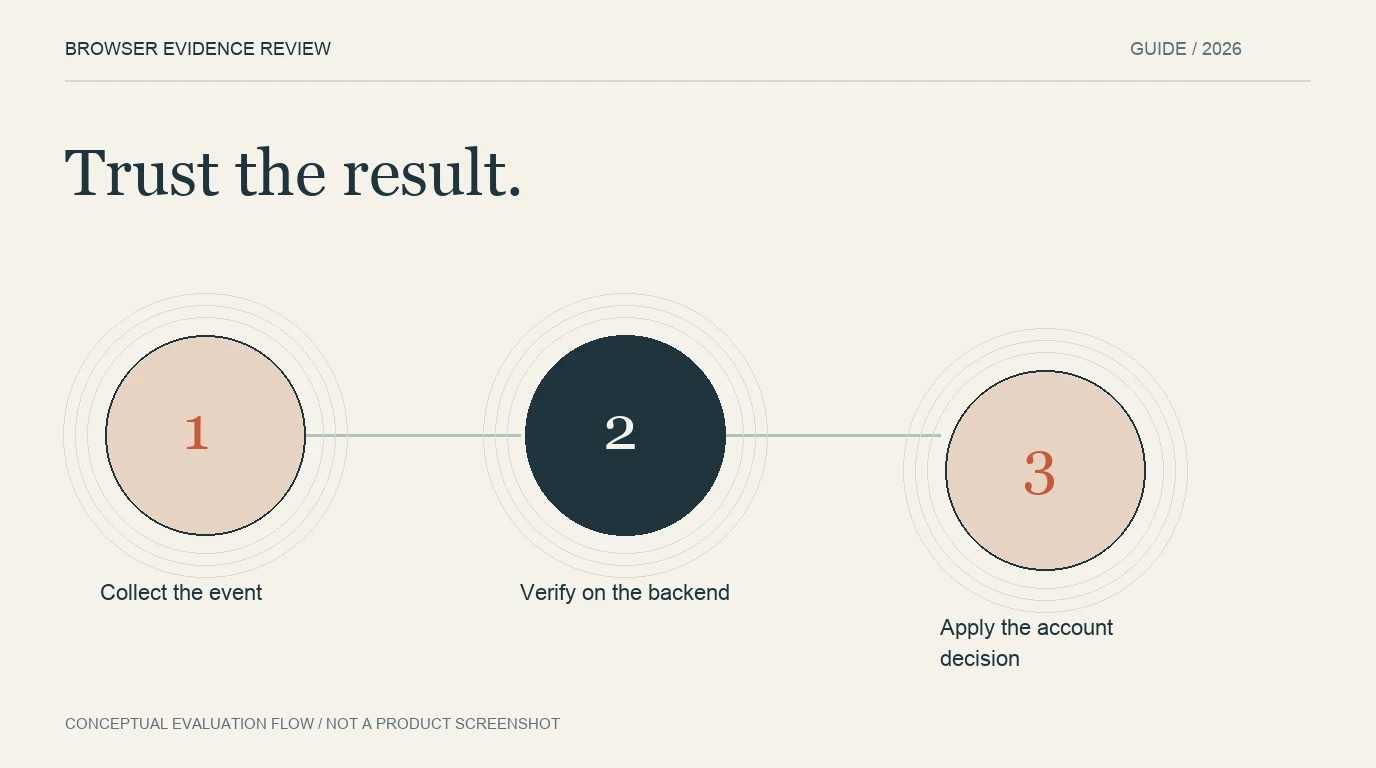
Conceptual browser evidence workflow: collect the event, verify on the backend, apply the account decision

Anti-detect browser detection API: trust the server result

Plan an anti-detect detection API integration: collect evidence, bind events to accounts, verify on the server and handle missing results before action.

Grace Calloway · 5 min read
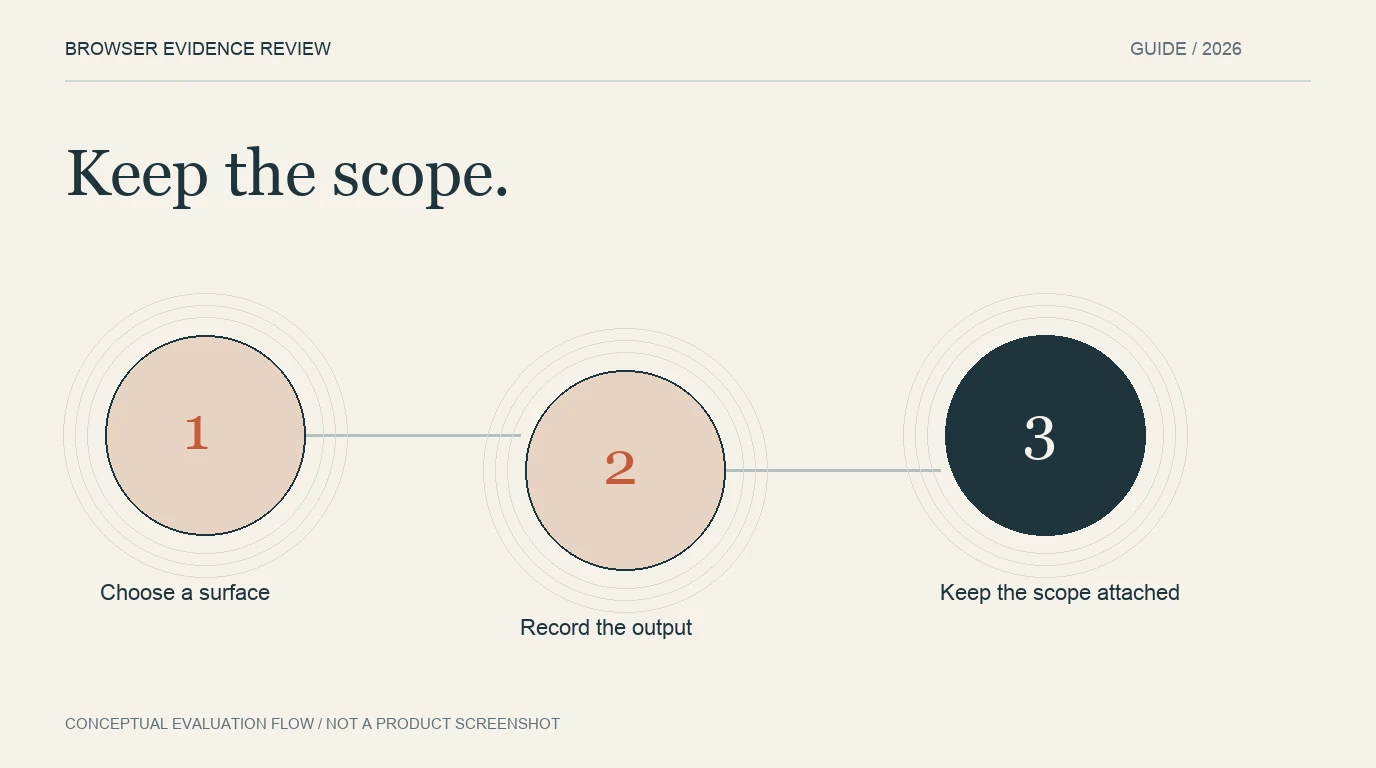
Conceptual browser evidence workflow: choose a surface, record the output, keep the scope attached

CreepJS vs BrowserLeaks vs Pixelscan: what each check means

Compare CreepJS, BrowserLeaks and Pixelscan by diagnostic scope, output and workflow. Learn what a browser checker can and cannot establish about fraud.

Grace Calloway · 5 min read
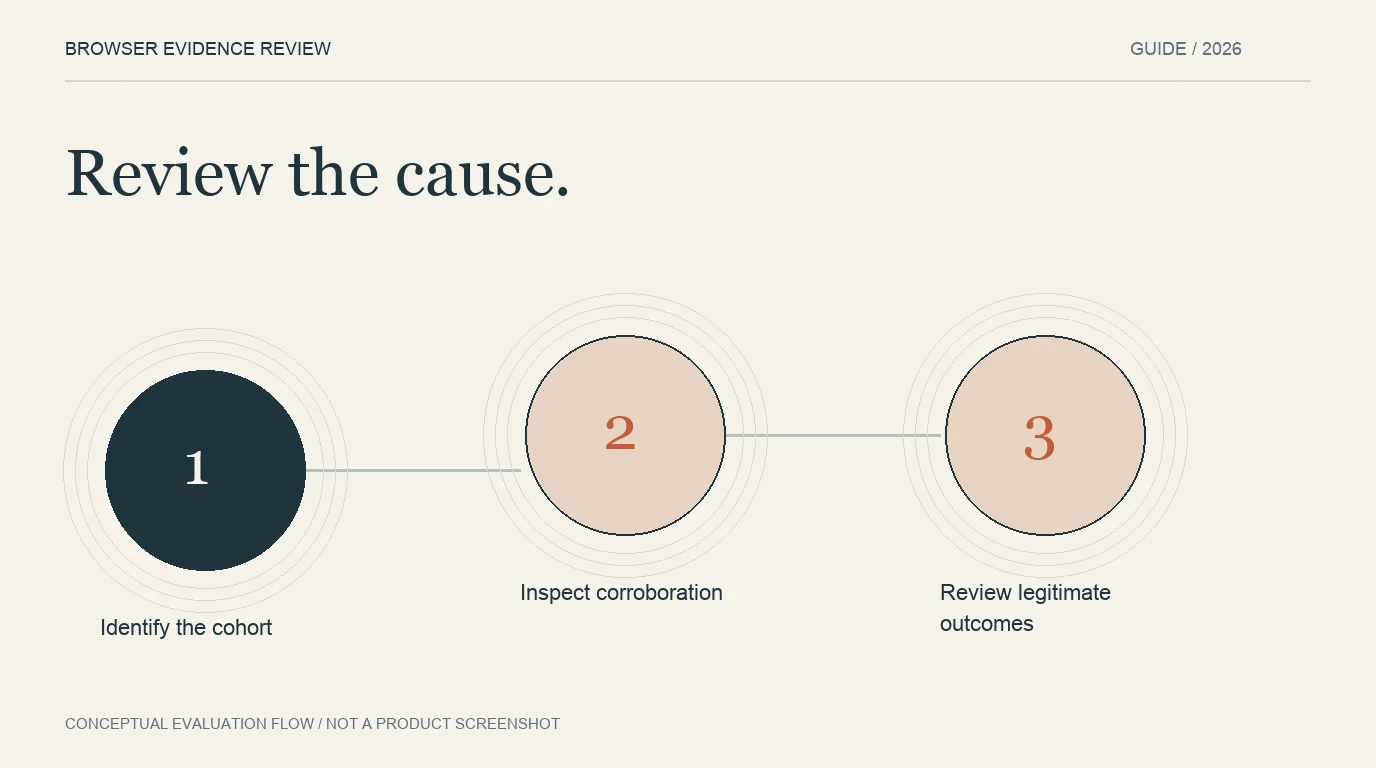
Conceptual browser evidence workflow: identify the cohort, inspect corroboration, review legitimate outcomes

Browser tampering false positives: protect privacy users

Separate browser tampering from privacy settings, corporate policies and genuine account behavior. Design controls, labels and review for false positives.

Grace Calloway · 5 min read
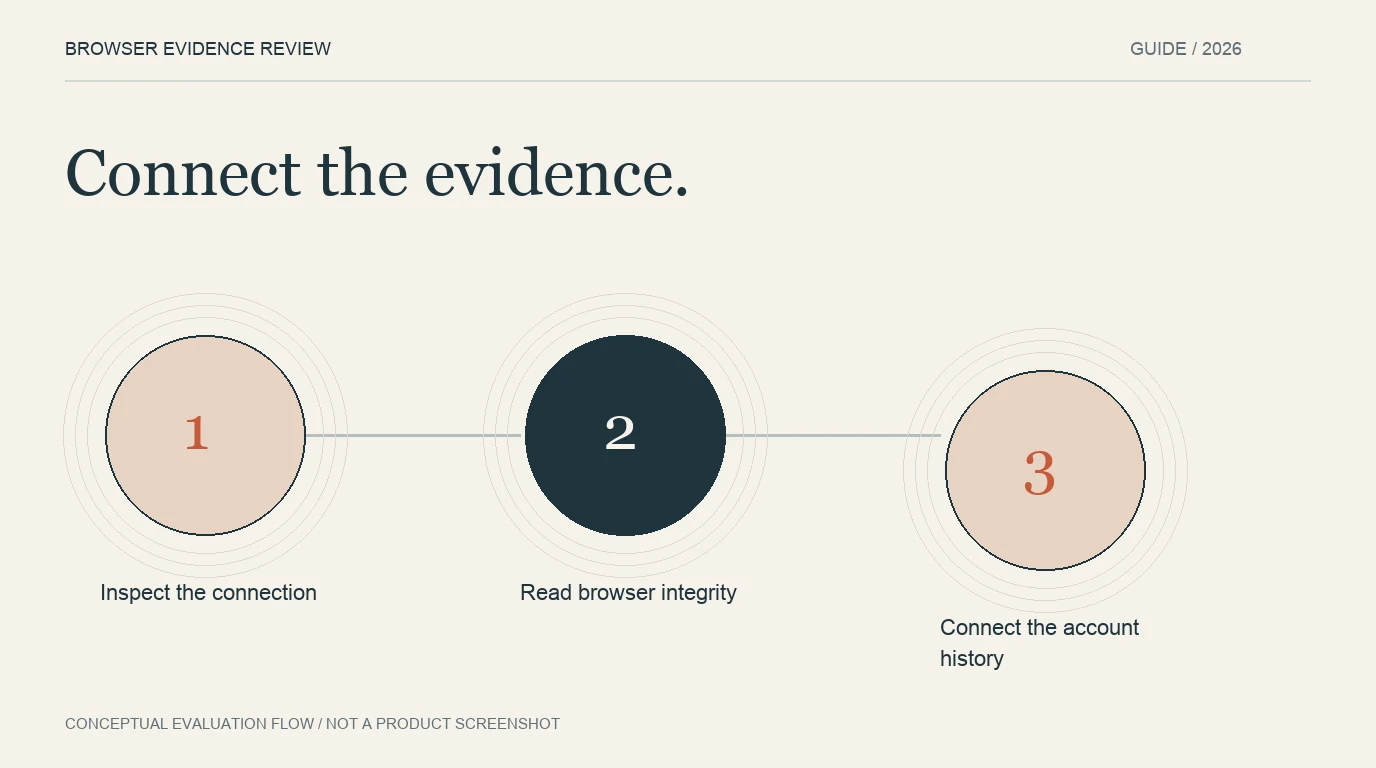
Conceptual browser evidence workflow: inspect the connection, read browser integrity, connect the account history

Detect anti-detect browsers behind residential proxies

Understand why residential IP reputation and browser integrity answer different questions. Combine network, browser and account evidence without blanket blocks.

Grace Calloway · 5 min read
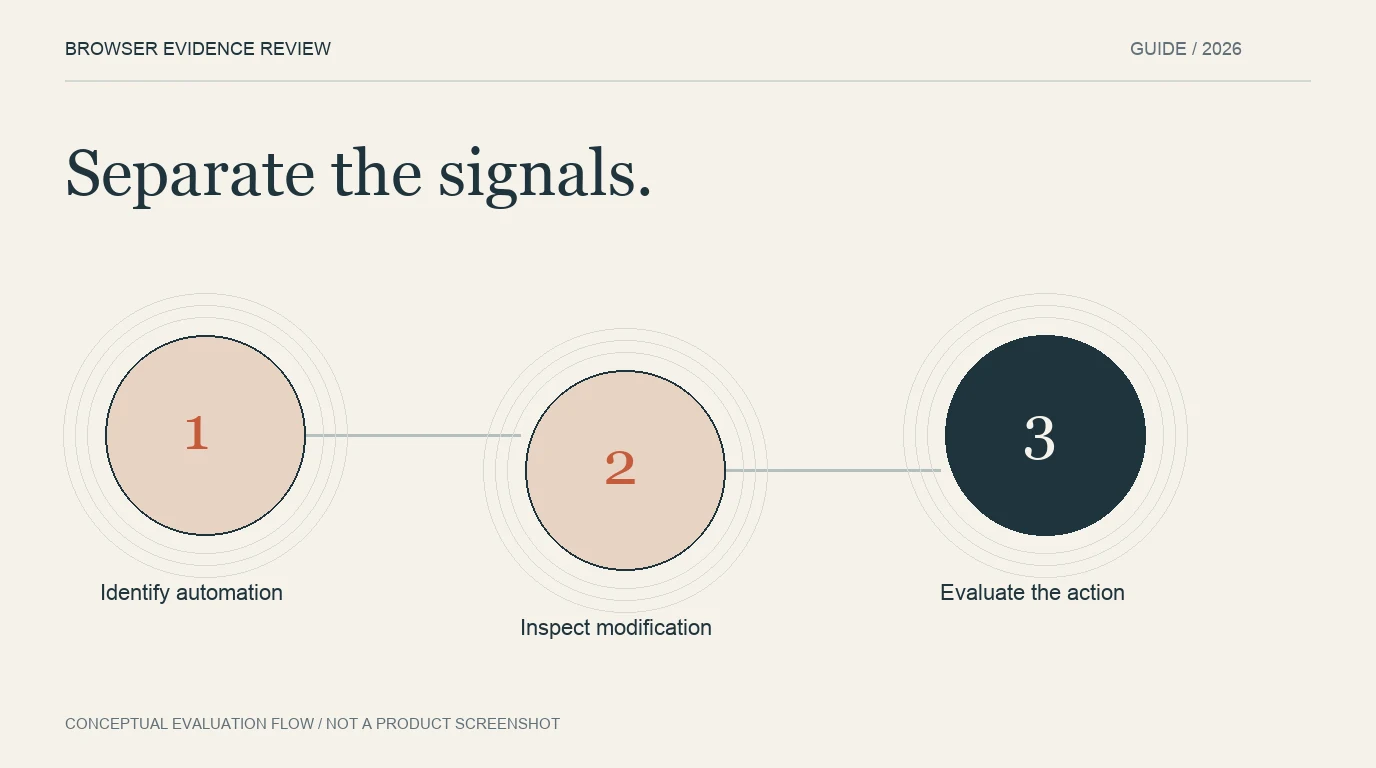
Conceptual browser evidence workflow: identify automation, inspect modification, evaluate the action

Headless browser vs anti-detect detection: different signals

Compare headless automation, browser tampering and account abuse. Evaluate legitimate QA, agents and modified browsers without conflating their risk signals.

Grace Calloway · 4 min read
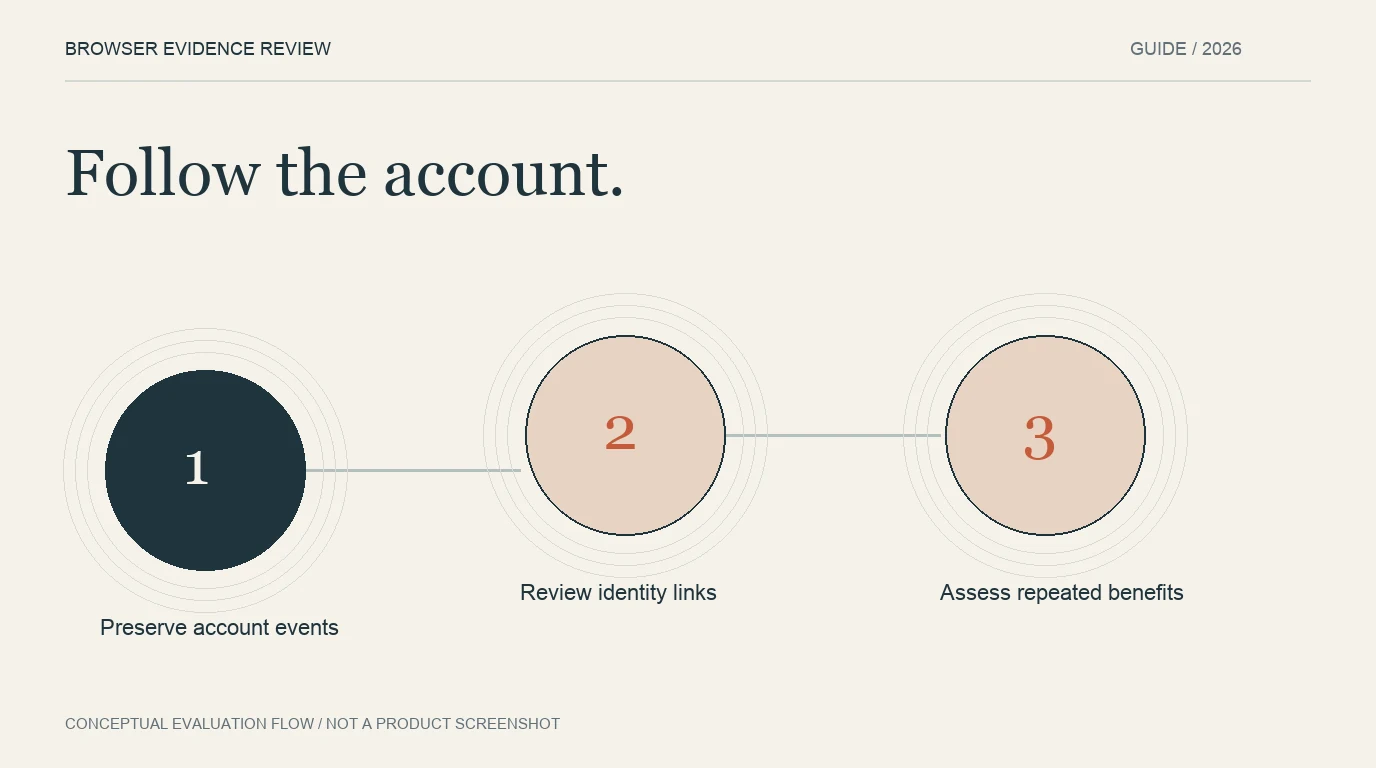
Conceptual browser evidence workflow: preserve account events, review identity links, assess repeated benefits

Detect multi-accounting across anti-detect browser profiles

Protect account benefits when browser profiles change. Separate device links, manipulation evidence and policy outcomes, then evaluate genuine shared use.

Grace Calloway · 5 min read
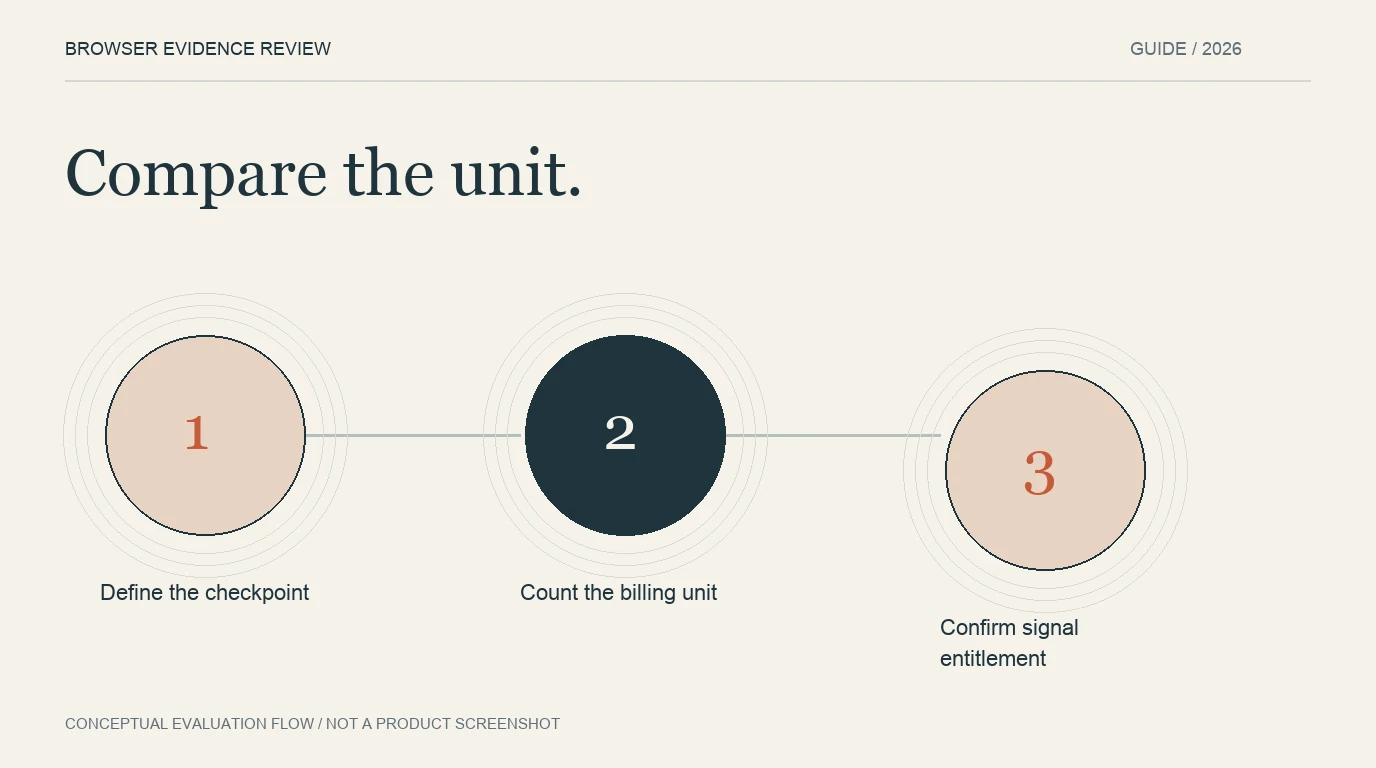
Conceptual browser evidence workflow: define the checkpoint, count the billing unit, confirm signal entitlement

Anti-detect browser detection pricing: compare units

Compare free diagnostics, identification APIs, fraud checks and request protection. Estimate anti-detect detection costs with clear plan and signal boundaries.

Grace Calloway · 4 min read

FAQ

FAQ about anti-detect browser detection tools.

How do you detect an anti-detect browser?

Inspect supported browser manipulation findings and corroborating device, network and account evidence. ShieldLabs cross-checks more than 300 signals and returns risk scores with named findings. Verify the result for the protected action and include legitimate controls; a plausible user agent is not sufficient.

Is there an anti-detect browser detection API?

Yes. ShieldLabs provides supported client collection with API and webhook results; Fingerprint, Castle, SEON and other production tools have their own integration models. Inspect named fields, platform and plan access. Public diagnostics such as CreepJS answer a different question from a trusted account-action API.

Which anti-detect detection tool is best for iGaming and marketplaces?

ShieldLabs fits teams needing device/network evidence, explainable risk and ready-made account events at signup or benefit checks. SEON adds broader enrichment and fraud operations; inline products have request-protection workflows. Assess applicable operational requirements separately from the detection score.

How do you detect an anti-detect browser behind a residential proxy?

A residential exit describes the observed connection, not browser integrity or account legitimacy. Inspect supported browser findings with network and account context. Do not assume that every original IP can be recovered, or that a missing address proves the environment is clean.

Is using an anti-detect browser illegal?

A browser result is technical evidence, not a legal determination. This comparison evaluates detection capabilities. Assess applicable law, authorization, data practices and platform terms separately for the proposed use; a product label alone does not settle those questions.

Is a device fingerprint alone enough to catch anti-detect browsers?

A fingerprint identifies observations under a product’s model. Anti-detect assessment also needs supported manipulation evidence and useful corroboration. A new identifier does not prove a new eligible person, and a browser finding does not establish an exact match to every earlier profile.

Will anti-detect detection flag privacy browsers like Brave?

Privacy settings and managed environments can alter observable behavior. Review the named signal, its cause and account context. Evaluate genuine privacy-browser controls rather than imposing a universal block or promising that every such configuration is harmless.

Is there a free anti-detect browser detection tool?

ShieldLabs provides 5,000 free identifications for a supported product evaluation. CreepJS, BrowserLeaks and Pixelscan provide free manual browser diagnostics. Fingerprint has a free identification allowance and a separate trial; verify ongoing anti-detect signal entitlement.

What if a fingerprint looks too clean?

A plausible fingerprint is not a complete integrity assessment. Inspect independent observations and the documented anomaly or manipulation finding. Preserve distinct scores and verify the actual account action instead of treating a clean-looking value as proof of legitimacy.

How do you handle a batch of trial accounts that each look like a different device?

Retain account actions, eligibility and supported device relationships. A manipulation finding can inform review even when profile identity changes, but it is not a promise that every profile resolves to one physical person. Inspect Multi-accounting findings in their documented scope before granting repeated benefits.

What if a banned multi-accounter returns the same day with a fingerprint you have never seen?

A new fingerprint does not establish a new eligible account. Review browser and network findings alongside prior account events and permitted identity links. Keep uncertainty visible, and do not claim that any new profile is guaranteed to be recognized or flagged.

Which low-cost anti-detect detection tools should a team evaluate?

Start with ShieldLabs’ 5,000 free identifications and published paid plans from 99 US dollars/month for 25,000. Public CreepJS, BrowserLeaks and Pixelscan diagnostics are free in a narrower scope. Compare the actual output and billing unit before calling any product the cheapest.

Summarize this page with